Driving in Italy: Everything you need to know
Driving in Italy is a rewarding way to explore the country’s historic cities, scenic countryside, and coastal roads, but understanding the local driving rules and road conditions will help you travel safely and confidently.
Quick summary
- The legal requirements for driving and renting a car in Italy.
- How Italian roads, road signs, speed limits, and toll roads work.
- What to know about ZTL zones, parking, local driving culture, and drink driving laws.
- What to do in the event of an accident, plus practical tips for driving safely throughout Italy.
Quick answers
- Is it easy to drive in Italy? — Yes. Driving is generally straightforward, although historic city centres and ZTL zones require extra attention.
- Do I need an International Driving Permit (IDP) in Italy? — It depends. Some visitors can drive with their domestic licence, while others must also carry an IDP.
- Where can I compare car rental prices in Italy? — Discover Cars. Compare prices from hundreds of trusted car rental companies across Italy at once, with flexible cancellation options.
- Where can I reserve parking in Italy? — Parclick. Compare and reserve parking spaces near airports, city centres, train stations, and popular attractions across Italy before your trip.
This article contains affiliate links.
Essential driving information
| Driving rule | Information |
|---|---|
| Driving side | Right |
| Speed limit (urban) | 50 km/h |
| Speed limit (rural) | 90 km/h |
| Motorway limit | 130 km/h |
| Alcohol limit | 0.5‰ |
| Seat belts | Mandatory |
| Child seats | Required under legal requirements |
| Emergency number | 112 |
| Fuel types | Petrol, Diesel, LPG, Electric |
What do you need to drive in Italy?
Documents you must carry
To drive in Italy, you must be at least 18 years old and carry the required documents. Police may request them during routine roadside checks, so keep them easily accessible rather than packed in your luggage.
You’ll generally need:
- A valid driving licence.
- An International Driving Permit (IDP), if required for your country.
- A passport or national identity card.
- The vehicle registration certificate (if driving your own car).
- Proof of valid car insurance.
Mandatory safety equipment
Cars driven in Italy must carry certain safety items required by law. If you’re renting a car, these are normally provided, but it’s still worth checking before leaving the rental office.
Mandatory equipment includes:
- A reflective safety vest.
- A warning triangle.
Dipped headlights or daytime running lights are required outside urban areas and in tunnels, even during the day.
Important. Winter tires or snow chains may be legally required on certain roads between November and April, depending on the region and weather conditions.
How do you rent a car in Italy?
Who can rent a car in Italy?
Most car rental companies require drivers to:
- Be at least 21 years old (sometimes 18–25, depending on the company).
- Hold a valid driving licence for at least one year.
- Meet any minimum age requirements for the selected car category.
Drivers under 25 often pay a young driver surcharge, while luxury or larger cars may have higher minimum age requirements.
What do you need to rent a car in Italy?
When collecting your rental car, you’ll usually need:
- A valid driving licence.
- An International Driving Permit (IDP), if required.
- A passport or national ID card.
- A credit card in the main driver’s name.
- Your booking confirmation, if requested.
Tips for renting a car in Italy
Before confirming your booking, consider these practical tips:
- Choose a smaller car if you plan to visit historic towns.
- Check whether unlimited mileage is included.
- Inspect the car carefully before driving away.
- Take photos of any existing damage.
- Understand the fuel policy and insurance coverage before signing the agreement.
Need a rental car in Italy? Discover Cars lets you compare prices from a wide range of car rental companies before booking.
If you’re planning to rent a car, be sure to read our complete guide to renting a car in Italy.
What are Italian roads like?
Italy has a modern road network that ranges from multi-lane motorways to narrow village streets and winding mountain roads. Road quality is generally good, although conditions can vary depending on the region.
Types of roads in Italy
Italy’s road network is divided into several categories:
| Autostrade (A) | Toll motorways connecting major cities. |
| Strade Statali (SS) | National roads linking towns and regions. |
| Strade Provinciali (SP) | Provincial roads, often passing through rural areas. |
| Strade Comunali | Local roads within towns and villages. |
Road signs usually indicate the road type using these abbreviations.
Toll roads (Autostrade) in Italy
Most motorways in Italy are toll roads. You collect a ticket when entering and pay before exiting, with charges based on the distance travelled. Payment is accepted by cash, credit cards, and electronic toll devices. Motorways are generally the fastest and most convenient option for long-distance travel.
Autostrade is usually efficient for long distances, but they are not always the best choice for scenic routes or short city-to-city trips.
Good to know. Keep your motorway ticket in a safe place. If you lose it, you may be charged the maximum toll for that motorway section.
Mountain and rural roads
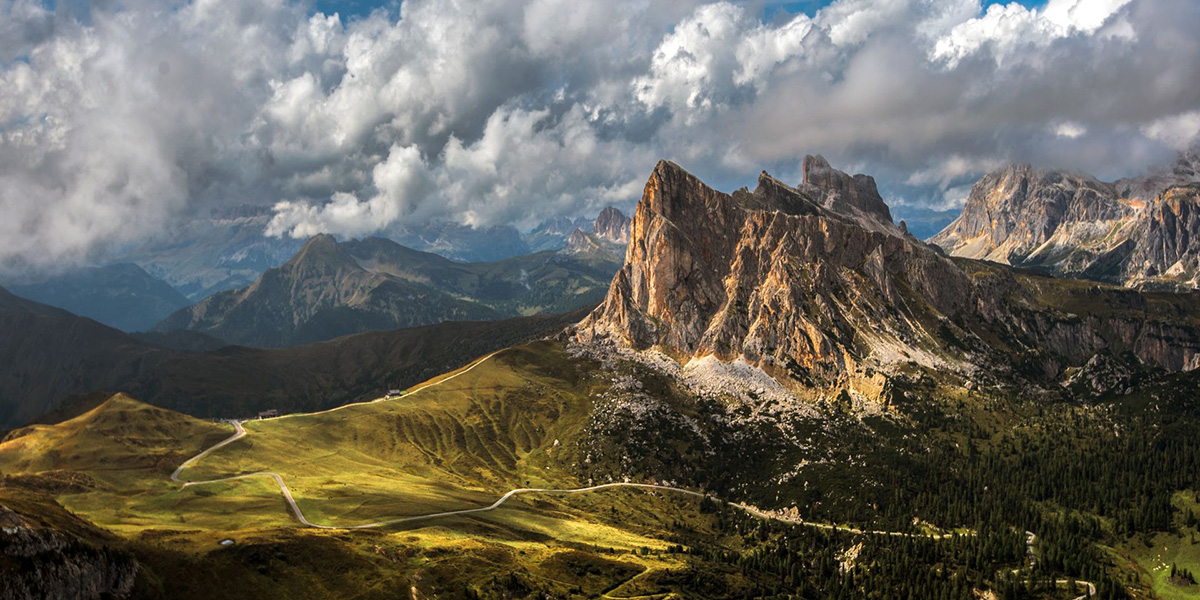
Mountain and rural roads are often narrower and more winding than motorways, particularly in the Alps, Dolomites, and parts of central and southern Italy. Drive carefully, reduce your speed on sharp bends, and be prepared for limited visibility. During winter, some mountain roads require winter tyres or snow chains.
In winter, check road conditions before driving into Alpine or Apennine areas.
What are the driving rules in Italy?
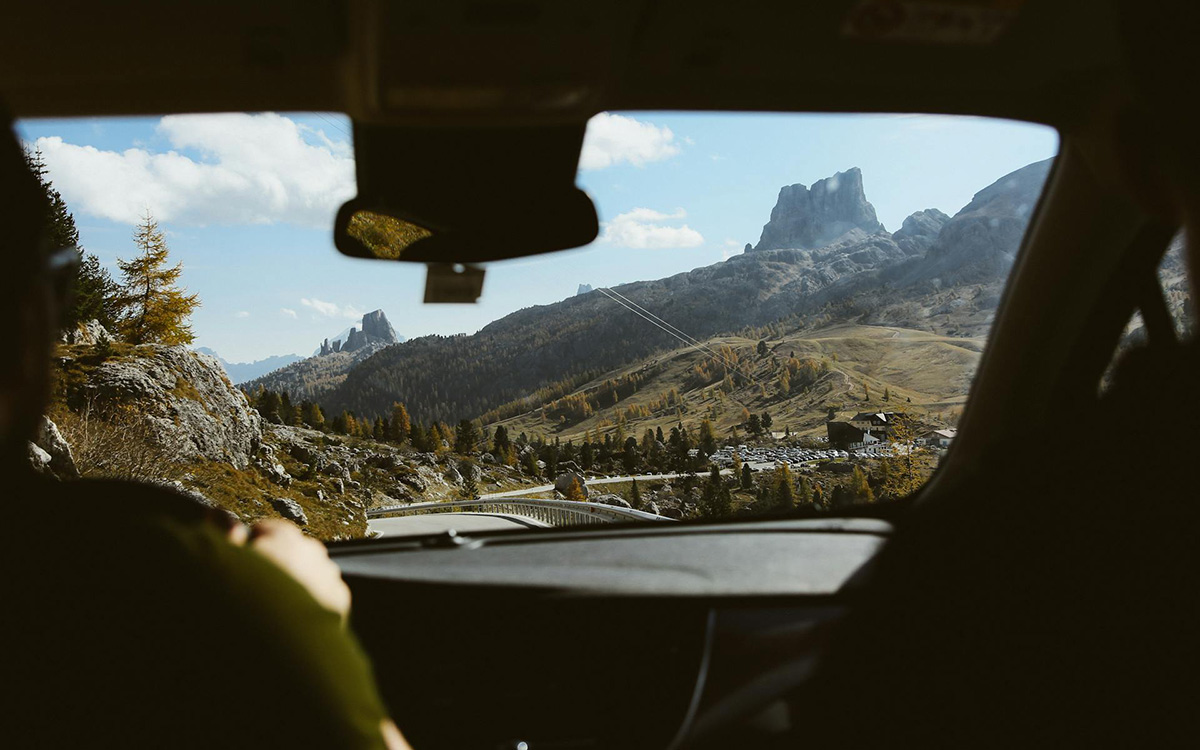
Driving in Italy is similar to driving in many European countries, although there are several local rules visitors should know.
Driving on the right
In Italy, you must drive on the right-hand side of the road and overtake on the left. At junctions without signs or traffic lights, vehicles approaching from the right generally have priority unless otherwise indicated.
Seat belt and mobile phone laws
Seat belts are mandatory for all passengers. Children must use an appropriate child restraint system based on their height and weight. Using a hand-held mobile phone while driving is illegal, but hands-free systems are permitted.
Overtaking and roundabout rules
Overtake only on the left when it is safe and permitted. At modern roundabouts, traffic already on the roundabout usually has priority, although you should always follow the road signs. Use your indicators when leaving the roundabout and avoid stopping unless necessary.
Headlights are required in tunnels and outside urban areas, even during the day.
Italian road signs and speed limits
Italian road signs follow international standards, making them easy to understand for most visitors. Knowing the meaning of sign colours, speed limits, and speed enforcement can help you drive safely and avoid fines.
Italian road signs by color
Road signs in Italy are color-coded:
| Green | Motorways (Autostrade) |
| Blue | Main roads and directions |
| White | Local roads and town destinations |
| Brown | Tourist attractions and places of interest |
| Yellow | Temporary roadworks and diversions |
| Red | Prohibitions and restrictions |
Speed limits in Italy
Unless signs indicate otherwise, the standard speed limits are:
| 130 km/h | Motorways (Autostrade) |
| 110 km/h | Dual carriageways |
| 90 km/h | Secondary roads |
| 50 km/h | Urban areas |
Always follow posted speed limits, as they may be lower due to weather, roadworks, or local conditions.
Some cities and local streets may have lower limits, including 30 km/h zones.
Speed cameras and traffic enforcement
Speed limits are strictly enforced throughout Italy. Fixed and mobile speed cameras are common, particularly on motorways and major roads.
Italy also uses the Tutor system, which calculates your average speed over a section of motorway rather than measuring your speed at a single point.
Speed camera signs are common, but drivers should not rely on warnings alone.
What is driving in Italian cities like?
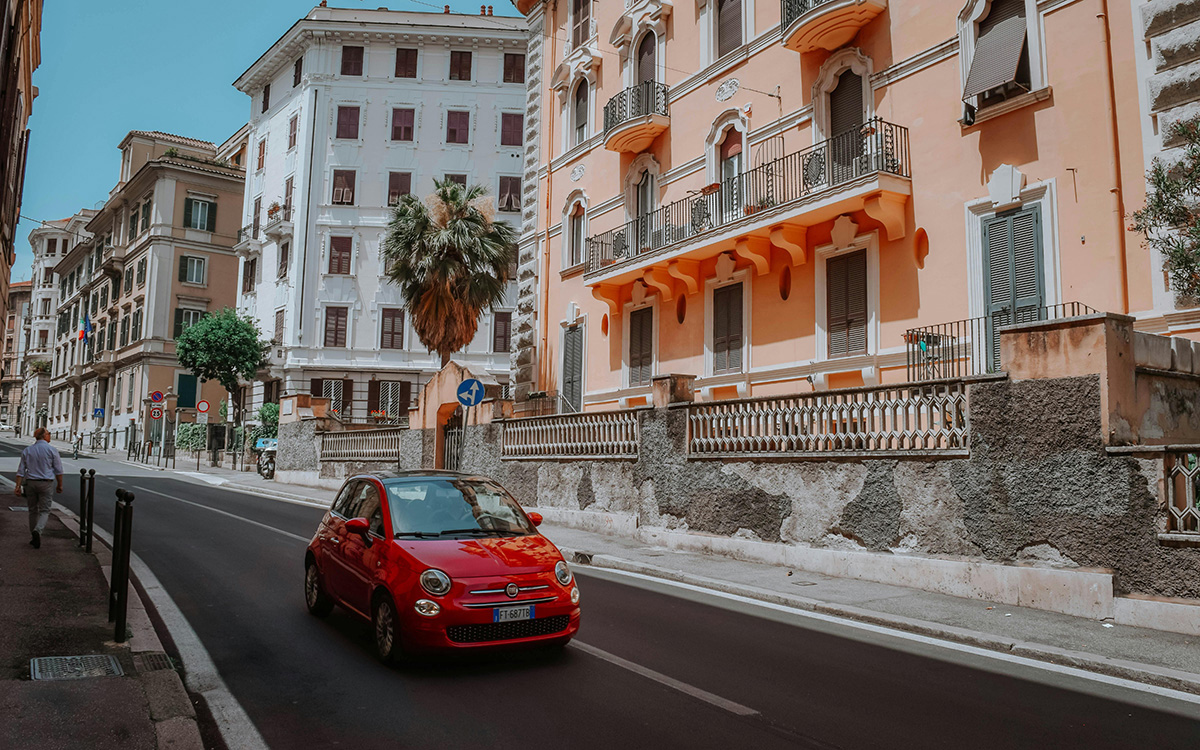
Driving in Italian cities can be more challenging than driving on motorways or rural roads.
Historic centres often have narrow streets, heavy traffic, and restrictions that visitors should be aware of before entering.
Limited Traffic Zones (ZTL)
Many Italian cities have Limited Traffic Zones (ZTL) where access is restricted to authorised cars during certain hours.
Entering a ZTL without permission can result in a fine, even if you are following your GPS.
Always check local signs and, if necessary, park outside the zone and continue on foot or by public transport.
Good to know. ZTL cameras usually record number plates automatically, so you may receive the fine after your trip.
How does parking work in Italy?
Parking in Italy is usually indicated by coloured lines:
| Blue | Paid parking |
| White | Free parking (where available) |
| Yellow | Reserved parking |
Always check nearby signs for time limits, payment requirements, or local restrictions before leaving your car.
Need parking in Italy? Compare prices and reserve your parking space in advance with Parclick to find convenient options near airports, city centres, and train stations across the country.
Local driving culture
Italian drivers are generally confident and assertive, especially in larger cities. Expect frequent use of scooters, busy roundabouts, and narrow streets. Drive predictably, stay alert, and don’t feel pressured to match the pace of local traffic.
What are the drink driving laws in Italy?
Italy has strict drink driving laws, and penalties become more severe as blood alcohol levels increase. If you plan to drink alcohol, the safest option is to avoid driving altogether.
Legal blood alcohol limits
The legal blood alcohol concentration (BAC) limit for most drivers is 0.05% (0.5 g/L).
Zero limit applies to:
- Drivers under 21.
- Novice drivers with licence less than 3 years.
- Professional drivers.
Penalties for drink driving
Penalties depend on your BAC level and the circumstances of the offence. They may include:
- Fines.
- Driving licence suspension.
- Car impoundment in some cases.
- Criminal charges for more serious offences.
Italian authorities actively enforce drink driving laws, so it’s best to arrange alternative transport if you intend to consume alcohol.
What are the penalties and fines for traffic offences in Italy?
Traffic laws in Italy are actively enforced, and fines can also be issued to foreign drivers. Following local rules and road signs is the best way to avoid unexpected penalties during your trip.
Common traffic violations
Some of the most common traffic violations include:
- Speeding.
- Using a hand-held mobile phone while driving.
- Failing to wear a seat belt.
- Illegal parking.
- Entering a ZTL without authorisation.
Speeding fines
Speeding fines vary depending on how much you exceed the posted speed limit. More serious offences can also result in licence suspension or additional penalties, particularly for excessive speeding.
ZTL and parking fines
Entering a Limited Traffic Zone (ZTL) without permission or parking illegally can result in substantial fines. If you’re driving a rental car, the rental company may also charge an administration fee for processing the penalty notice.
Good to know. Fines can increase if paid late, and rental companies may charge a separate administration fee for forwarding your details.
What are the best tips for driving safely in Italy?
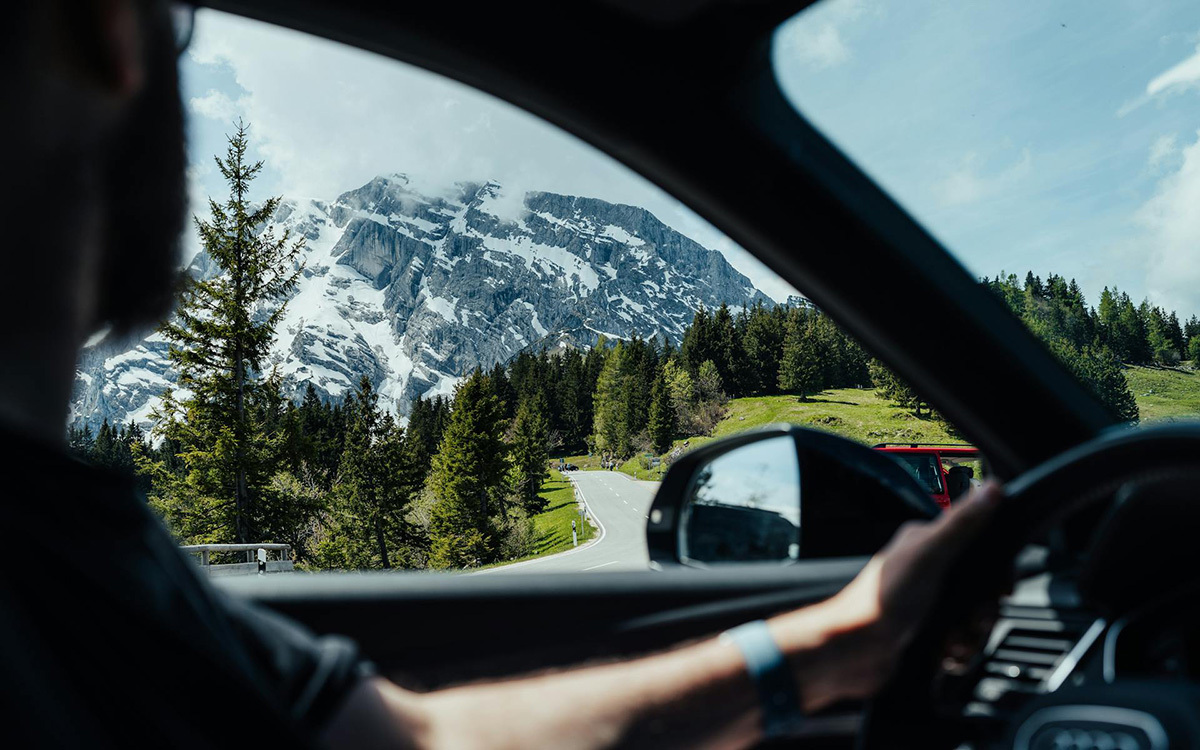
These practical tips will help make driving in Italy safer and less stressful.
- Plan your route. Check your route in advance to avoid toll roads, ZTL zones, or seasonal road closures if they don’t fit your travel plans.
- Watch for scooters. In larger cities, scooters often filter through traffic, so check your mirrors carefully before turning or changing lanes.
- Choose a smaller car. Compact cars are much easier to drive and park on narrow streets in historic towns and villages.
- Follow local speed limits. Speed cameras are common throughout Italy, so always pay attention to posted speed limits.
- Keep a safe following distance. Local drivers may travel at different speeds, especially on motorways, so leave enough space between cars.
- Avoid driving in historic centres. Parking outside the city centre and walking or using public transport is often the easier option.
- Carry some cash or a payment card. Although most toll booths accept cards, having an alternative payment method can be useful.
- Take regular breaks. Long motorway journeys and winding mountain roads can be tiring, so stop regularly to stay alert.
- Do not rely only on GPS. Navigation apps may direct you toward ZTL zones, narrow old-town streets, or restricted access roads.
What should you do if you have an accident in Italy?
Road accidents are relatively uncommon, but knowing what to do can help you stay safe and simplify the insurance process.
Immediate steps after an accident
If you’re involved in an accident:
- Stop immediately and switch on your hazard lights.
- Check whether anyone is injured.
- Call emergency services if anyone is injured, the road is blocked, or there is disagreement about what happened.
- Wear a reflective vest before leaving the car.
- Place a warning triangle if it is safe to do so.
- Exchange contact and insurance details with the other driver.
Emergency numbers in Italy
If you need emergency assistance, use the following numbers:
| 112 | European emergency number (police, ambulance, and fire services) |
| 803 116 | ACI roadside assistance |
If you’re driving a rental car, contact the rental company as soon as possible after the incident.
For minor accidents, drivers in Italy commonly use the European Accident Statement form.
What is driving like in Italy’s most popular cities?
| City | Easy to drive | ZTL | Easy to park |
|---|---|---|---|
| Rome | ★★ | Yes | ★ |
| Milan | ★★★ | Yes | ★★ |
| Florence | ★★ | Yes | ★ |
| Naples | ★★ | Limited | ★ |
| Venice | ★ | Yes | ★ |
| Bologna | ★★★ | Yes | ★★ |
| Turin | ★★★★ | Limited | ★★★ |
| Pisa | ★★★★ | Yes | ★★★★ |
| Bari | ★★★ | Limited | ★★★ |
| Palermo | ★★ | Limited | ★★ |
| Catania | ★★★ | Limited | ★★★ |
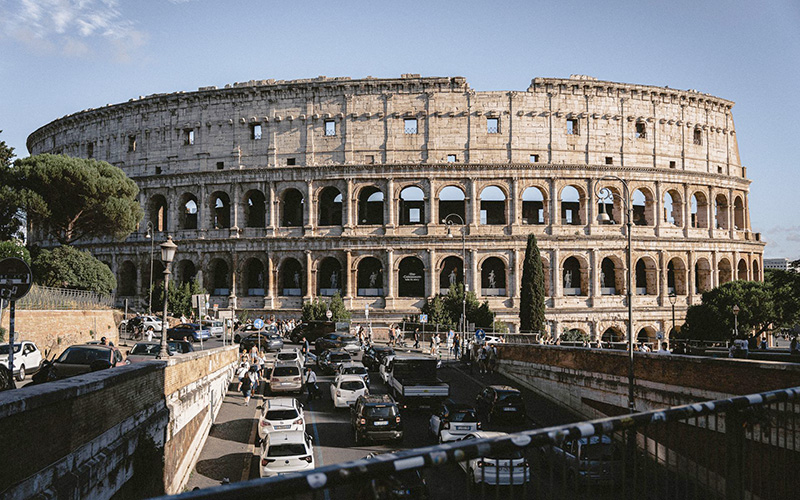
- Driving in Rome. Rome combines heavy traffic, Limited Traffic Zones (ZTL), and limited parking in the historic centre. If you plan to drive here, it’s worth familiarising yourself with local restrictions before arriving.
- Driving in Milan. Milan has a busy road network and congestion during peak hours. The city also operates ZTL areas, so check access rules before entering the centre.
- Driving in Florence. Florence’s historic centre has extensive traffic restrictions, making driving there challenging for visitors. Parking outside the centre is often the most practical option.
- Driving in Naples. Driving in Naples can feel fast-paced, with dense traffic and narrow streets. Staying alert and driving defensively is particularly important.
- Driving in Venice. Cars are not allowed in Venice’s historic centre. Most visitors park in Tronchetto or Piazzale Roma and continue on foot or by water bus.
- Driving in Bologna. Bologna has several ZTL areas and a compact city centre. Planning your parking can help you avoid unnecessary fines.
- Driving in Turin. Turin is generally easier to drive in than many historic Italian cities, thanks to its wide streets and grid layout. Traffic is usually busiest during commuting hours.
- Driving in Pisa. Pisa is relatively easy to navigate by car, although the historic centre has restricted traffic zones. Parking outside the main attractions is often the most convenient choice.
- Driving in Bari. Bari mixes modern roads with a historic old town, where streets narrow significantly. Expect heavier traffic near the city centre and waterfront.
- Driving in Palermo. Palermo is known for heavy traffic and limited parking in central areas. Driving patiently and watching for scooters can make getting around easier.
- Driving in Catania. Catania has a lively traffic environment, particularly around the city centre. If you’re planning day trips around eastern Sicily, renting a car is often a practical choice once you leave the city.
Plan your trip to Italy
FAQs
No. Most roads are easy to drive on, although historic city centres and ZTL zones require extra attention.
Yes. Renting a car gives you the freedom to explore smaller towns, scenic routes, and rural areas at your own pace.
Carry the required documents, understand the local road rules, and watch for ZTL zones in major cities.
Yes. Tourists can legally drive in Italy if they meet the country’s licence and document requirements.
It depends. Some visitors can use their domestic licence, while others must also carry an IDP.
Yes. Most motorways (Autostrade) charge tolls based on the distance travelled.
It depends. White spaces are often free, blue spaces are usually paid, and yellow spaces are reserved.
A ZTL is a restricted traffic zone where access is limited to authorised cars during certain hours.
No. Using a hand-held mobile phone while driving is illegal, but hands-free systems are permitted.