Driving in Rome: Everything you need to know
Driving in Rome can be challenging for first-time visitors, but with the right preparation, it is a practical way to explore the city and central Italy.
Quick summary
- Learn whether driving in Rome is the right choice for your trip and when renting a car makes the most sense.
- Understand Rome’s driving rules, ZTL zones, parking options, and the local driving culture before you set off.
- Find practical tips for renting a car, avoiding common mistakes, and driving confidently around the city.
- Discover the best day trips and scenic road trips from Rome to explore central Italy by car.
Quick answers
- Is it easy to drive in Rome? — Moderate to difficult. Driving is manageable once you understand ZTL zones, parking rules, and the local driving style, but the historic centre can be challenging for first-time visitors.
- Do you need a car in Rome? — It depends. A car is usually unnecessary for sightseeing in central Rome, but it is an excellent choice if you plan to take day trips or road trips across central Italy.
- Where can you rent a car and find parking in Rome? — Compare all car rental companies in Rome with Discover Cars and book secure parking in advance with Parclick to save time and often find better prices.
This article contains affiliate links.
Essential driving information
| Information | Details |
| Driving difficulty | Moderate to difficult |
| Parking difficulty | Very difficult |
| Driving licence | EU licences are accepted. Many non-EU visitors also need an International Driving Permit (IDP) |
| Driving side | Right-hand side of the road |
| ZTL zones | Restricted Traffic Zones are camera-controlled and unauthorized entry results in fines |
| Toll roads | Yes. Most motorways around Rome are toll road |
| Road quality | Generally good on motorways and major roads |
| Scooters | Watch for scooters filtering between lanes |
| Speed cameras | Widely used on urban roads and motorways |
| EV charging | Public charging stations are widely available across Rome |
| Emergency number | 112 |
Is it worth driving in Rome?
It depends. Driving in Rome is worthwhile if you plan to explore beyond the city, but it is usually unnecessary for sightseeing in the historic centre.
For most visitors, the best strategy is to avoid driving inside central Rome and rent a car only when leaving the city.
When renting a car makes sense
Renting a car is often the better choice if your trip includes destinations outside Rome. It offers greater flexibility and makes it easier to explore central Italy at your own pace.
- You plan to take day trips or road trips from Rome.
- You want to visit destinations with limited public transport.
- You are travelling with family, children, or a lot of luggage.
- You are staying outside the city centre.
- You value flexibility and want to travel on your own schedule.
When you should avoid driving
Driving is usually not the most practical option if you plan to spend most of your time in central Rome. Public transport and walking are often more convenient for visiting the city’s main attractions.
- You are staying in Rome’s historic centre.
- Your itinerary focuses mainly on Rome’s attractions.
- You want to avoid ZTL restrictions and parking fees.
- You are uncomfortable driving in busy city traffic.
- You plan to use public transport for most journeys.
If you’re planning a longer journey across the country, you may also find our complete driving in Italy guide helpful, covering national driving rules, toll roads, speed limits, and essential tips for driving throughout Italy.
What do you need to know before driving in Rome?
Before driving in Rome, make sure you have the required documents, understand the local road signs, and are prepared for the city’s fast-paced driving style.
Required documents
Before setting off, ensure you have all the necessary documents with you. Rental companies and the police may ask to see them during your trip.
- Valid driving licence (an International Driving Permit may also be required for some non-EU licences)
- Passport or national ID
- Rental agreement
- Vehicle registration documents (usually provided by the rental company)
- Proof of insurance
Road signs
Road signs in Rome follow the standard Italian and European system, so they are generally easy to understand. Pay particular attention to signs marking ZTL zones, parking restrictions, speed limits, and one-way streets.
| Blue arrow | One-way street |
| Red circle with white bar | No entry |
| Blue circle | Mandatory direction |
| Red circle | Prohibition or restriction |
| Blue “P” | Parking |
| Zona Traffico Limitato | Restricted Traffic Zone |
| Speed limit | Maximum speed in km/h |
Speed limits in Rome and Italy
Limits may be lower near schools, residential streets, tunnels, and roadworks. Always follow posted signs.
| 50 km/h | Urban area |
| 90 km/h | Secondary roads |
| 110 km/h | Dual carriageways |
| 130 km/h | Motorways |
Local driving culture
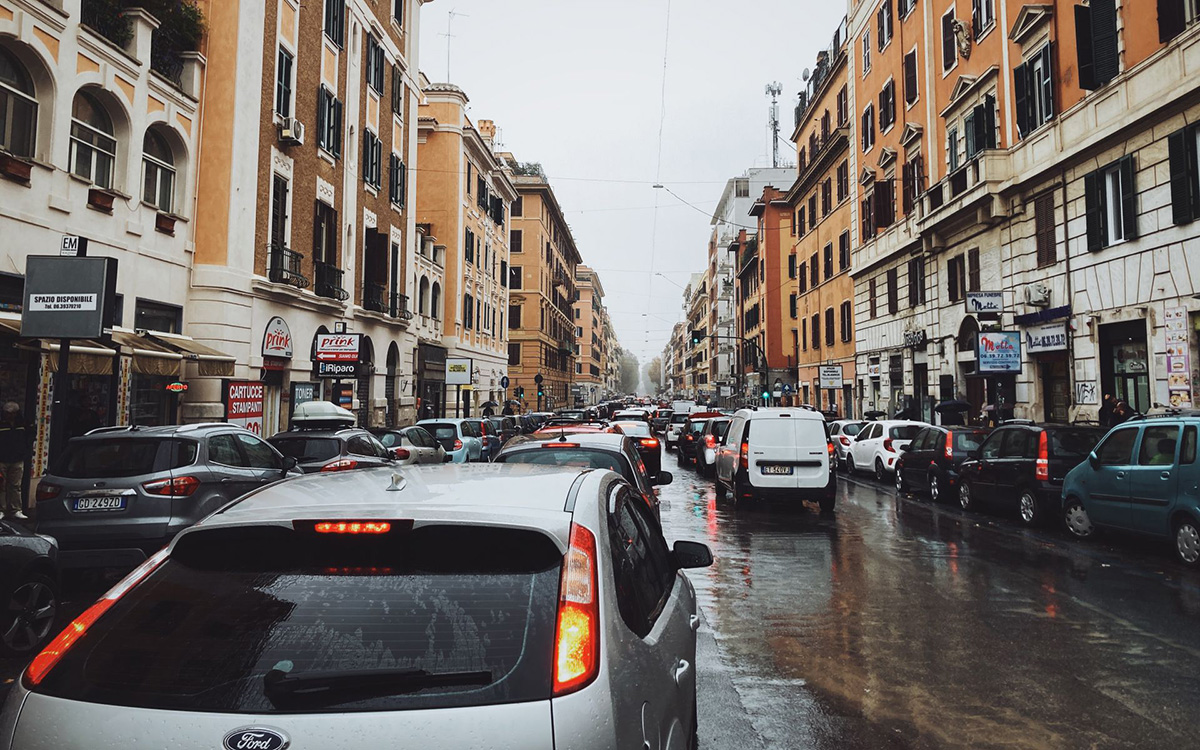
Driving in Rome is often more assertive than in many other European cities. Staying alert, anticipating the actions of other drivers, and remaining patient will make driving much less stressful.
- Expect heavy traffic, especially during rush hours.
- Watch carefully for scooters filtering between cars.
- Be prepared for frequent lane changes.
- Yield to pedestrians at marked crossings.
- Drive defensively and avoid aggressive manoeuvres.
What do you need to know before renting a car in Rome?
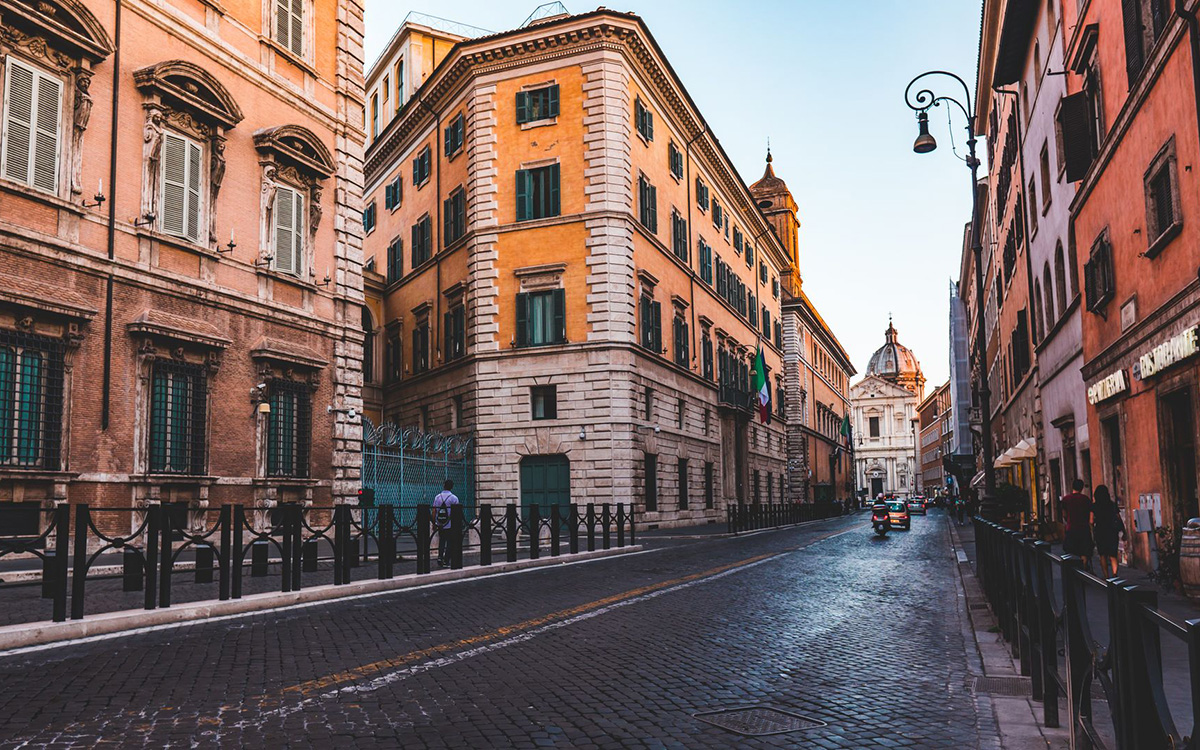
Renting a car in Rome is straightforward, but choosing the right pickup location, transmission, and booking time can make a noticeable difference to both cost and convenience.
A little planning before you book can help you save money and avoid common mistakes.
How can you find the best car rental deal in Rome?
The best way to find a good car rental deal in Rome is to book early, compare several companies, and check the full rental conditions before choosing the lowest price.
- Book as early as possible, especially during the summer.
- Compare prices from multiple companies.
- Check insurance, deposits, and mileage limits.
- Choose a full-to-full fuel policy when available.
- Read recent customer reviews before booking.
Need a car rental in Rome? Compare offers from a wide selection of car rental companies in Rome with Discover Cars, including pickup options at Fiumicino Airport, Ciampino Airport, and the Rome city centre.
Insurance and deposits
Most rental companies require a credit card deposit, and the amount depends on the car, insurance package, and company policy.
Before booking, check the excess amount, deposit, fuel policy, mileage rules, and what is included in the insurance.
Rome Airport or city centre: Where should you pick up your rental car?
It depends on your itinerary.
If you plan to leave Rome shortly after arriving, car rental at Rome Fiumicino Airport or Rome Ciampino Airport is often the most practical option, as airport rental offices usually offer a wider choice of cars and competitive prices.
If you intend to spend a few days sightseeing before driving, car rental in Rome city centre can be more convenient, allowing you to avoid traffic and ZTL restrictions until you’re ready to leave the city.
- Airport pickup often provides lower prices and more availability.
- City centre pickup can save you from driving in central Rome.
- Consider where your accommodation is located.
- Compare one-way rental fees if returning the car elsewhere.
Good to know. If you’re staying in central Rome first, consider collecting your rental car only when you’re ready to leave the city.
Manual or automatic: Which rental car should you choose?
It depends on your driving experience and preferences.
Manual cars are more common and usually cheaper, while automatic cars are easier to drive in busy city traffic but often cost more and should be booked well in advance.
- Manual cars are usually the most affordable option.
- Automatic cars are available but in lower numbers.
- Reserve an automatic early, especially in peak season.
- Choose the transmission you feel most comfortable driving.
If you are not comfortable with a manual transmission, do not book one only to save money; Rome’s traffic can make that choice stressful.
How do ZTL zones work in Rome?
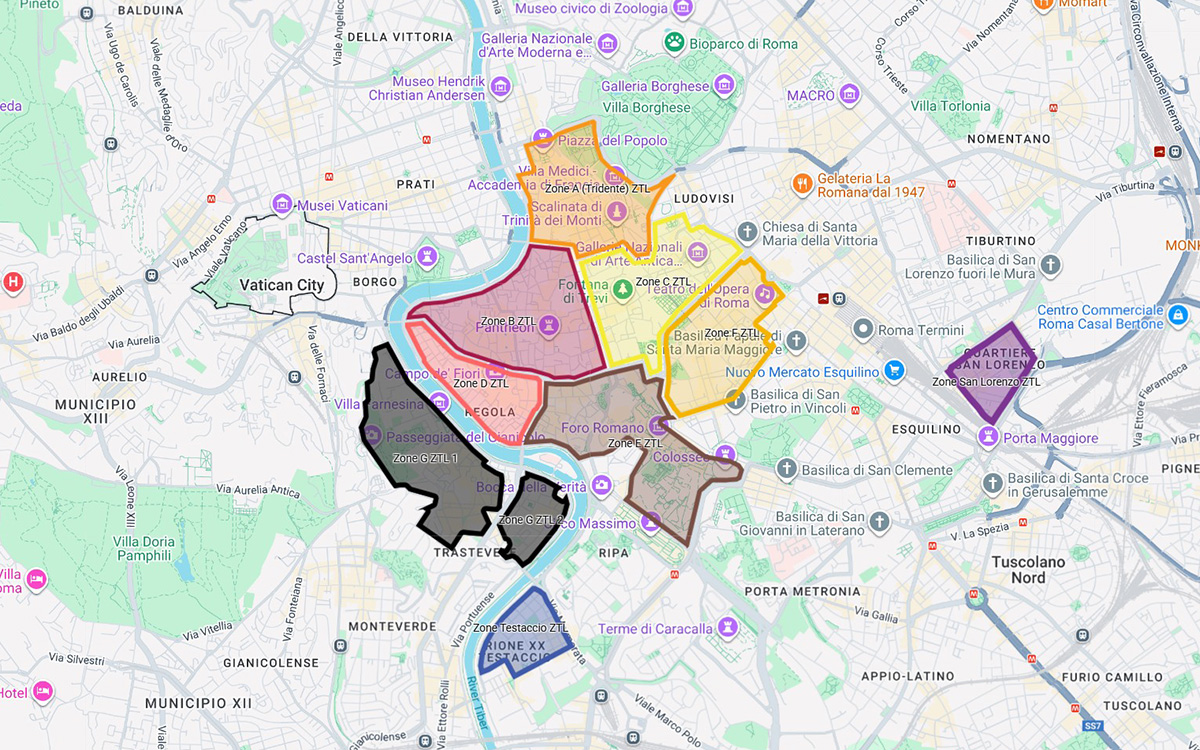
ZTL (Zona a Traffico Limitato) zones in Italy are restricted traffic areas where vehicle access is controlled by cameras.
Unauthorized vehicles entering a ZTL during operating hours may receive a fine, making these zones one of the most important things to understand before driving in Rome.
Where are the main ZTL zones in Rome?
The main ZTL zones in Rome cover the historic centre and several central districts, including areas where many visitors stay or pass through. ZTL entrances are marked with signs and monitored by cameras, so drivers should slow down and check the sign before continuing.
ZTL hours can vary by area, day, season, and nighttime rules. Always check signs locally.
Who can enter a ZTL?
Only authorized vehicles can enter a ZTL during restricted hours. Residents, public transport, emergency services, and some hotel guests with prior registration may be permitted, while most rental cars are not automatically exempt.
Staying at a hotel inside a ZTL does not automatically allow you to enter. The hotel may need to register your licence plate in advance.
How to avoid ZTL fines
The easiest way to avoid ZTL fines is to watch for ZTL signs and never enter a restricted zone unless you are certain your car is authorized.
Use a navigation app that displays ZTL areas, follow local road signs, and check the operating hours before your trip.
If you are unsure how Rome’s Restricted Traffic Zones work, read our detailed guide to ZTL zones in Rome before driving.
Important. Staying at a hotel inside a ZTL does not automatically allow you to drive into the zone. Contact your hotel before arrival.
Where can you park in Rome?
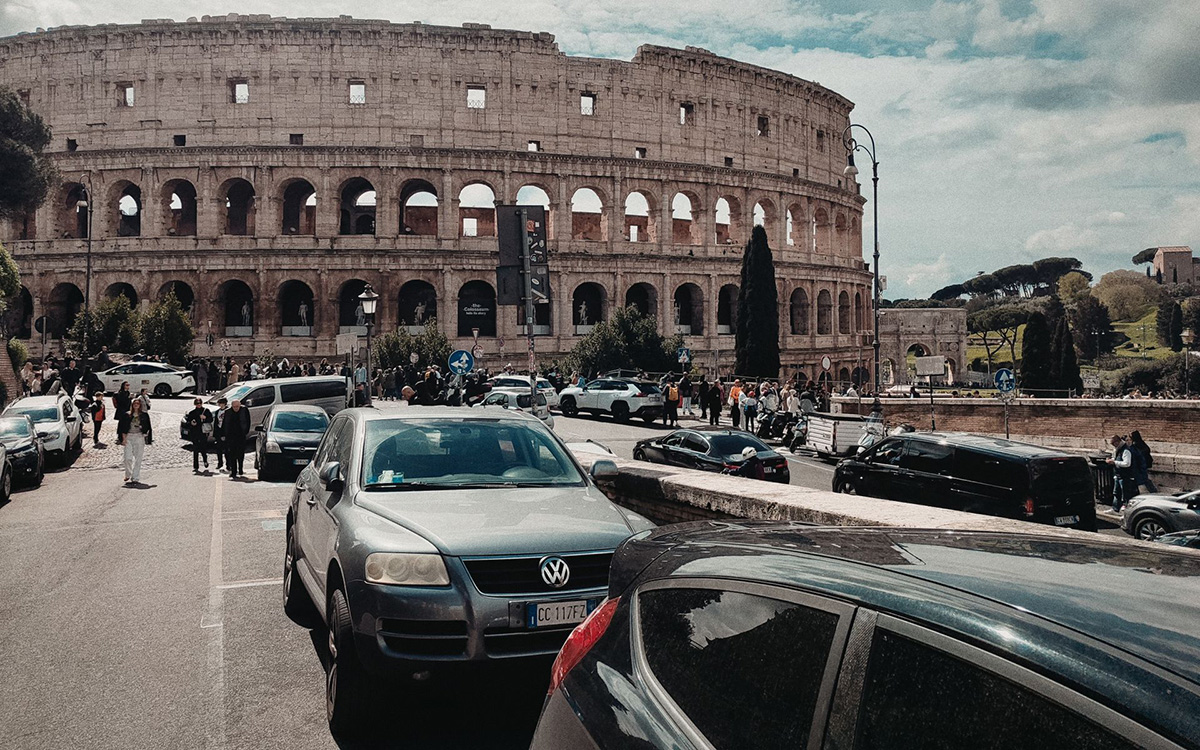
Parking in Rome is available on the street, in public garages, and at park-and-ride facilities, but finding a space can be challenging, especially in the historic centre.
Street parking
Street parking is widely available, although spaces are often limited in central Rome. Blue lines indicate paid parking, white lines are usually free where available, and yellow spaces are reserved for authorized users such as residents or disabled permit holders.
| Blue lines | Paid parking |
| White lines | Free or time-limited parking |
| Yellow lines | Reserved parking |
Parking garages
Parking garages are often the most convenient option near the city centre. Although they are generally more expensive than street parking, they provide greater availability, security, and reduce the risk of parking violations.
Parking tips to avoid fines
Following a few simple parking rules can help you avoid fines and make parking in Rome much less stressful.
- Check nearby signs for parking restrictions and operating hours.
- Pay for blue parking spaces where required.
- Only use white spaces if parking is permitted.
- Never park in yellow reserved spaces.
- Avoid parking inside ZTL zones unless your car is authorized.
- Use a parking garage if you’re visiting the historic centre.
If you’re unsure where to park, read our guide about parking in Rome.
Need parking in Rome? Book your parking space in advance with Parclick and compare secure parking options across Rome, including the city centre, airports, and major transport hubs.
What are the most common mistakes when driving in Rome?
The most common mistakes usually involve ZTL zones, parking rules, traffic pressure, and choosing the wrong rental car.
- Driving into a ZTL zone. Restricted Traffic Zones are camera-controlled, and unauthorized entry can result in a fine.
- Parking in yellow spaces. Yellow-marked spaces are reserved for authorized users, such as residents or disabled permit holders.
- Ignoring parking signs. Always check local signs, as parking rules and time restrictions vary by location.
- Choosing a car that’s too large. Narrow streets and tight parking spaces make compact cars a better choice.
- Not booking an automatic in advance. Automatic cars are less common and often sell out during peak season.
- Driving during rush hour. Heavy traffic can significantly increase travel times and make driving more stressful.
- Relying only on GPS. Navigation apps may not always prevent you from entering ZTL zones, so always watch roadside signs.
- Not checking your rental agreement. Review insurance, fuel policy, deposit requirements, and any restrictions before collecting your car.
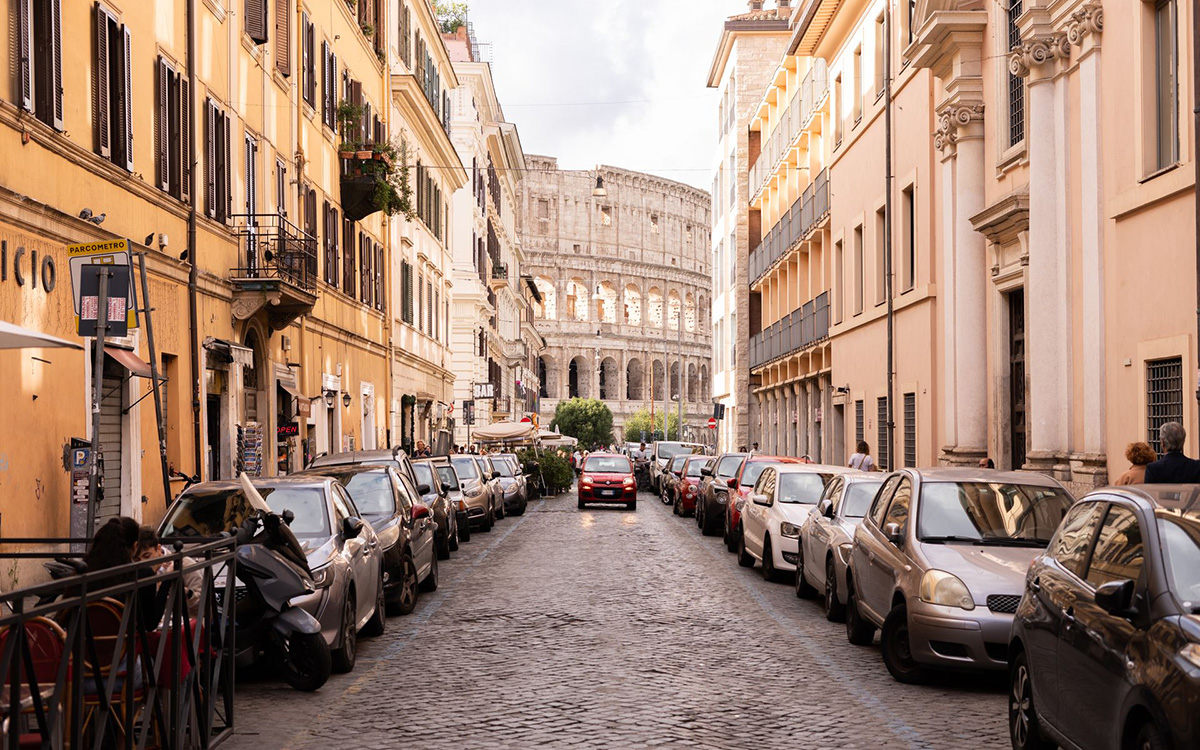
What are the best day trips from Rome by car?
If you’re planning to explore beyond the capital, these are some of the best day trips from Rome that are well worth taking by car.
- Castelli Romani (30–45 minutes). Escape the city to explore charming hill towns, volcanic lakes, local wineries, and traditional restaurants.
- Tivoli (45–60 minutes). Visit the UNESCO-listed Villa d’Este and Hadrian’s Villa, both known for their historic architecture and gardens.
- Orvieto (1 hour 30 minutes). Visit this hilltop town, known for its spectacular cathedral, underground tunnels, and scenic streets.
- Civita di Bagnoregio (1 hour 45 minutes). Visit one of Lazio’s most atmospheric hill towns, known for its dramatic setting and pedestrian bridge.
- Perugia (2 hours 15 minutes). Discover Umbria’s capital, known for its historic centre, panoramic views, and vibrant food scene.
- Naples (2 hours 30 minutes). Experience one of Italy’s most vibrant cities, famous for its historic centre, authentic pizza, and waterfront.
- Siena (2 hours 45 minutes). Explore the medieval city centre, the famous Piazza del Campo, and the impressive Siena Cathedral.
What are the best road trips from Rome?
One of the best road trips from Rome is a five-day route through Umbria and Tuscany, with overnight stops in Perugia, Siena, Pisa, Lucca, and Florence.
- Day 1: Rome → Perugia (2 hours 15 minutes). Start your road trip by exploring Perugia’s medieval centre, panoramic viewpoints, and local restaurants before staying overnight.
- Day 2: Perugia → Siena (1 hour 30 minutes). Drive through the rolling landscapes of Umbria and Tuscany before spending the day in Siena’s historic centre.
- Day 3: Siena → Pisa (1 hour 45 minutes). Visit the famous Leaning Tower of Pisa and explore the surrounding Piazza dei Miracoli before staying overnight.
- Day 4: Pisa → Lucca (30 minutes). Spend the day discovering Lucca’s Renaissance walls, charming streets, and relaxed atmosphere.
- Day 5: Lucca → Florence (1 hour 20 minutes). End your road trip in Florence, where you can visit world-famous museums, historic piazzas, and Renaissance landmarks before continuing your journey or returning to Rome.
This route works best if you do not need to return the car to Rome, although returning to Rome is possible with a longer final drive.
Plan your trip to Rome
FAQs
Plan your route before setting off, stay alert, and avoid driving in the historic centre unless necessary. Watch carefully for ZTL signs, choose a compact car if possible, and avoid rush hours to make driving less stressful. Using a navigation app and parking in a garage can also save time and help you avoid fines.
It depends. Traffic can feel busy and fast-paced, especially for first-time visitors, but most drivers adapt quickly once they become familiar with the local driving style. Staying patient, driving defensively, and avoiding peak traffic hours will make the experience much easier.
Yes. Most motorways (Autostrade) connecting Rome with other parts of Italy are toll roads. Tolls are usually paid at motorway exits by cash, card, or electronic payment systems, while roads within Rome itself are generally toll-free.
Road conditions in Rome are generally good, especially on major roads and motorways. Some streets in the historic centre are narrow and paved with cobblestones, which can make driving slower and parking more challenging. Outside the city, roads are usually well maintained.
Basic insurance is usually included with every rental car, but it often comes with a high excess. Many travelers choose additional Collision Damage Waiver (CDW) or full coverage to reduce their financial liability in the event of damage. Always check what is included before booking.
The cheapest time to rent a car in Rome is usually between November and March, excluding the Christmas and New Year holidays. Prices tend to be lower outside the main tourist season, while availability is often better than during the busy summer months.
Yes. Driving in Rome is generally safe, although busy traffic, scooters, and ZTL zones require extra attention. Driving defensively, following local road signs, and avoiding distractions will help you travel safely throughout the city.
It depends on your priorities. International companies such as Hertz, Avis, Europcar, Sixt, Enterprise, and Budget operate alongside reputable local companies throughout Rome. Comparing offers through Discover Cars is often the easiest way to find competitive prices, compare rental conditions, and choose the company that best suits your trip.