Is renting a car in Italy expensive? Real costs and examples
Is renting a car in Italy expensive? The answer depends on timing, location, booking choices, and understanding how car rental prices are structured.
This guide explains what makes renting a car in Italy feel expensive, what travelers usually pay in practice, where prices rise unexpectedly, and how to avoid overpaying when choosing and booking a car rental in Italy, based on typical booking patterns seen across popular Italian rental locations.
This article contains affiliate links.
Where to find the lowest car rental prices in Italy
Finding the lowest car rental prices in Italy often comes down to price comparison. In some cases, the same car can cost 40–75% less depending on where you book, and careful searching can save €20–€40 per day, especially at airports and during peak season.
There are two major platforms that allow travelers to compare prices and save money on the same car from the same company, often revealing large price differences for identical rentals.
No single platform consistently offers the cheapest price in every situation, which is why comparing more than one source often gives a clearer picture of the real market range.
Discover Cars
Italy’s car rental market is fragmented, with identical vehicles frequently listed at different prices. Discover Cars brings together offers from major international and local providers, making it easier to compare options side by side and spot genuine price differences without checking multiple websites.
EconomyBookings
Car rental prices in Italy can vary depending on the sales channel rather than the car itself. EconomyBookings compares offers from a wide range of suppliers in one place, helping travelers identify lower-priced listings for the same vehicle and rental conditions.
How much does it really cost to rent a car in Italy?
In many cases, average daily rates range from roughly €15 to €40, with increases during the summer and at busy airports. For flexible travel beyond cities, the added freedom often balances the cost. These figures typically apply to small and mid-size cars booked in advance, rather than last-minute or premium rentals.
Whether renting a car in Italy feels expensive depends on how you travel and where you go. For many routes, flexibility offsets the cost, especially beyond cities.
Most travelers end up paying within a mid-range band rather than headline-low prices.
This balance of value, convenience, and trade-offs is explored in a guide on whether renting a car in Italy makes sense.
Average car rental cost per day in Italy
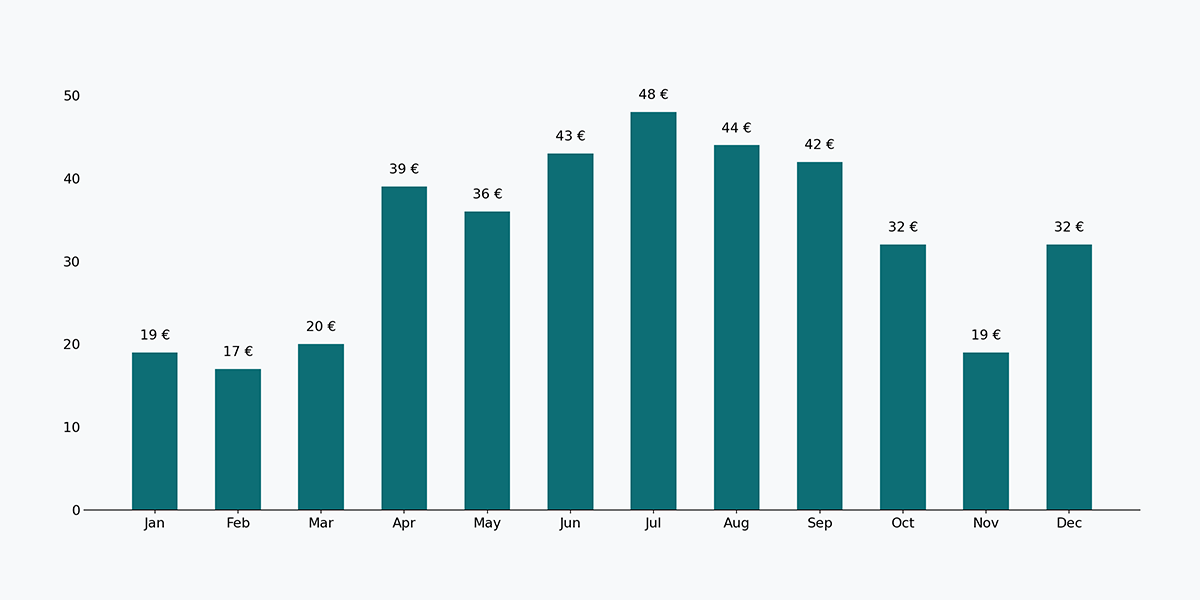
Average daily car rental prices in Italy vary sharply by month. Winter months are cheapest, with February at €17 and January and November at €19 per day. Prices rise in spring, reaching €39 in April, and peak in summer at €48 in July. Costs ease in autumn, dropping to €32 in October before rising slightly to €32 in December.
For a full breakdown of how these prices change throughout the year and what drives the differences, see the detailed guide on Italy car rental prices by month.
How much does it cost to rent a car in Italy for a week?
Average weekly car rental cost in Italy
For most travelers, a one-week car rental in Italy typically costs between €150 and €300 for standard economy or compact cars, depending on season, location, and car type. Airport pickups, automatic cars, and summer travel usually sit at the higher end of this range.
Is a weekly car rental cheaper than daily rates?
Weekly rentals are often cheaper than booking day by day, as many providers offer reduced daily rates for longer hires. Savings tend to be modest but consistent, particularly in low and shoulder seasons when availability is higher.
How to avoid overpaying for a rental car in Italy
Common car rental mistakes to avoid
Many travelers overpay by booking last-minute, choosing the wrong pickup location, or accepting unnecessary insurance. Skipping price comparisons and overlooking fuel policies are also frequent mistakes that quietly increase the final rental cost.
These issues are especially common for first-time renters in Italy, who may not yet be familiar with local rental practices.
How to spot overpriced rental offers
Overpriced offers often stand out through unusually high daily rates, limited inclusions, or aggressive insurance upsells. Comparing similar cars across platforms helps reveal when a price is out of line with typical market rates for the same dates.
How car rental prices differ across regions in Italy

Cheapest regions in Italy for car rental
Car rental prices tend to be more reasonable in regions such as Umbria, Abruzzo, and Emilia-Romagna, where demand is steadier throughout the year and less driven by short, intense tourist peaks, keeping availability higher and daily rates more stable. Prices can still rise during local festivals or holiday periods, even in generally affordable regions.
Most expensive regions for car rental
Car rental prices are typically highest in regions with dense international traffic and strong year-round demand. Areas such as Lazio, Lombardy, and Veneto often sit at the top end, with rentals at Rome Fiumicino Airport and Milan Malpensa Airport reflecting higher prices driven by volume, limited availability, and peak travel pressure.
For travelers weighing cost against experience, the guide to the 10 best regions to visit in Italy by car offers useful context on which areas deliver the best balance of scenery, driving enjoyment, and overall value.
What is the cheapest way to rent a car in Italy?
Book early
Booking early usually results in lower prices and better availability, particularly for automatic cars and airport pickups. In many cases, reserving at least 3 to 4 weeks in advance helps lock in lower base rates before demand increases and prices begin to rise.
Compare prices
Comparing prices across platforms is often the most effective way to reduce costs. Because identical cars can be listed at different rates, travelers who understand how and where to find a cheap rental car usually uncover better deals than booking directly with a single provider.

Why car rental prices in Italy feel so expensive
Hidden fees that raise car rental prices
Car rental costs often rise due to add-ons that appear after booking. Airport surcharges, young driver fees, fuel policy differences, and optional extras like GPS or additional drivers can significantly increase the final price compared to the advertised base rate.
The European Consumer Centre (ECC-Net) notes that insurance, deposits, and extra charges are frequent sources of unexpected costs in EU car rentals.
Why insurance makes car rental more expensive
Insurance is one of the main reasons rentals feel costly. Many providers promote low base prices, then add expensive coverage at pickup. While additional coverage can be useful in some situations, it is not always necessary for every traveler. Full insurance, reduced excess options, and deposit protection can quickly push the total well beyond initial expectations.
Final thoughts
So, is renting a car in Italy expensive? In many cases, it doesn’t have to be.
Understanding how prices are structured is often the difference between a reasonable rental and an unexpectedly expensive one.
Costs depend heavily on when and where you rent, how early you book, and how carefully you compare offers.
For travelers heading beyond major cities, a rental car often delivers flexibility and value that outweigh the added expense, especially when planned thoughtfully.
FAQs
For tourists, renting a car in Italy isn’t inherently expensive, but it can feel that way without planning. Costs vary widely by season, pickup location, and insurance choices. With early booking and careful comparison, rentals are often reasonably priced for non-city travel.
A realistic budget is around €20–€45 per day or €150–€300 per week for a small or mid-size car. Summer travel, airport pickups, and automatic vehicles usually increase costs beyond these ranges.
Prices differ because the same rental company often sells cars through multiple platforms with different pricing rules, commissions, and promotions. Availability, fleet size, and insurance packaging also affect how much the same car ultimately costs.
Airport rentals are often more expensive, especially in summer, but not always. They can be competitively priced in low season or when booked early. Convenience and demand, rather than location alone, usually drive the higher prices.
Insurance upgrades can add €15–€40 per day, while deposits commonly range from €200 to €2,000, depending on car type and coverage. These amounts aren’t always clear at booking and often surprise travelers at pickup.
In many cases, yes—especially for families, groups, or rural itineraries. When traveling outside major cities or making multiple stops, a rental car can be cheaper and more flexible than combining trains, taxis, and regional transport.
Prices rise most sharply during July and August, around major holidays, and close to pickup dates. Airports and coastal regions experience the steepest increases when availability tightens quickly.
Common mistakes include booking at the last minute, skipping price comparisons, choosing unnecessary insurance, and overlooking fuel policies. Renting automatic cars without early booking also often leads to higher prices.
To avoid hidden fees, read rental terms carefully, compare total prices rather than base rates, and understand insurance and fuel policies in advance. Booking early and using comparison platforms helps reveal the full cost upfront.